By Joanie Harmon
Neuroscientist and director of UCLA Center for Dyslexia, Diverse Learners and Social Justice collaborates on international resources for families, pediatricians, and educators.
July 9, 2020
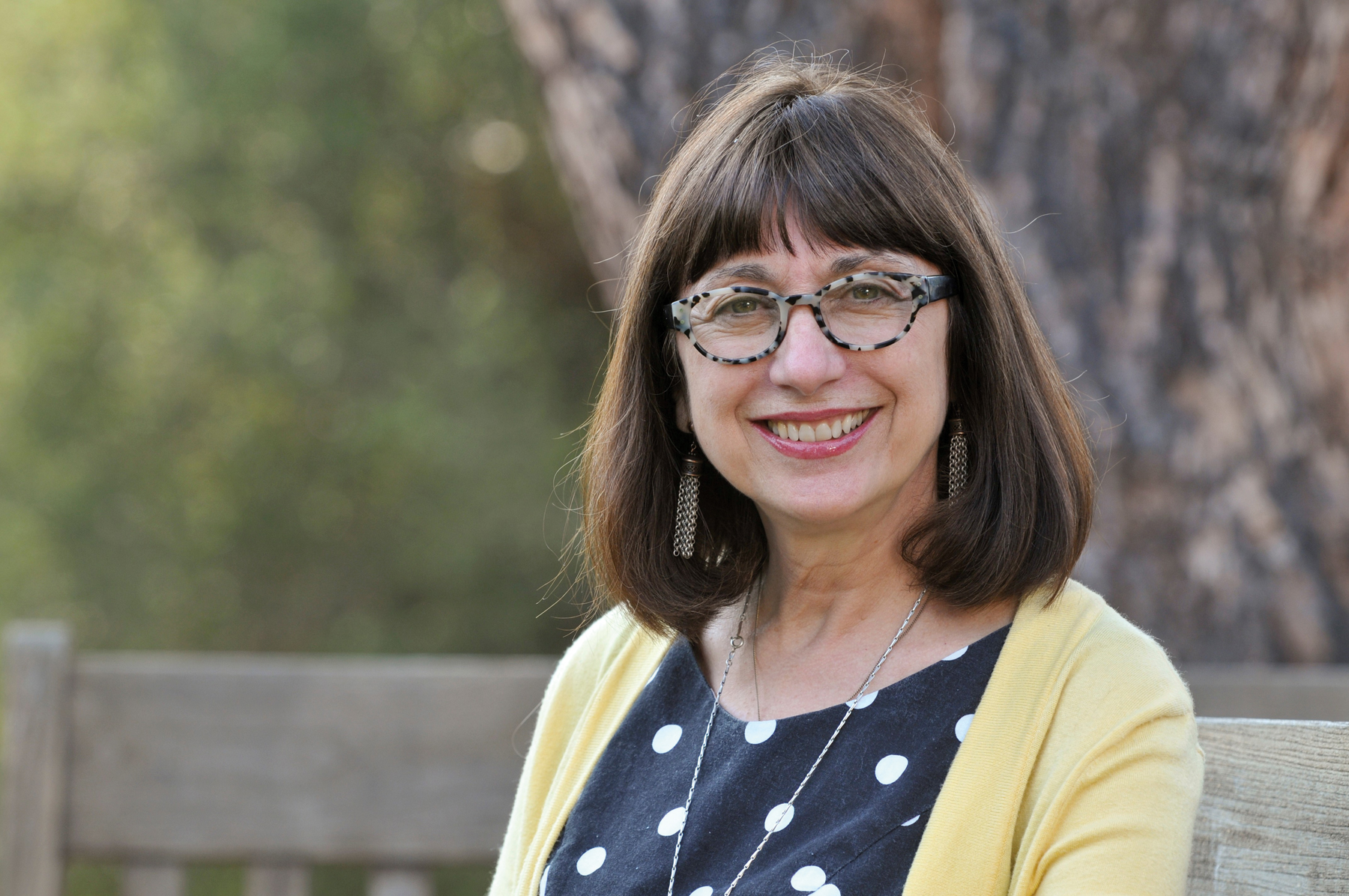
Maryanne Wolf says that when she was in the second grade, she was “always in trouble for talking much too much.”
“I wrote about this in “Proust and the Squid,” my first book,” says Professor Wolf, who directs the Center for Dyslexia, Diverse Learners and Social Justice at UCLA. “I went to a two-room schoolhouse [that] had four grades in each room. By the second grade, I must have tested the patience of a saint. I was not the only second grader who already learned whatever the fourth grade was being taught, but I was the only one who talked incessantly about it. Everything was so interesting!”
“Sister Rose Margaret … threw up her hands because of me. And then suddenly, the back of my little classroom was flooded by books. I later learned that my sainted teacher went to my parents, who were by no means rich, and told them that they had a problem that could be solved if she could ‘put me on books’. From second grade on, I had my own Great Books program. I read every book that had to do with saints, heroes, everything about science – I’ll never forget the book, “All About Stars”!
“Books changed my life as a child,” notes Wolf. “I became every single heroine, villain, explorer I read about. I believe I would never have become a scholar without my experiences with those great books. In fact, their wonderful mix of literature and science may well have been the roots of my work today on the science of words.”
Wolf, whose research is focused on cognitive neuroscience, the reading brain, language, and dyslexia, is currently working on a way to ensure that other children everywhere can have that access to reading, regardless of the pandemic’s limited access to schools and libraries or students’ level of reading proficiency.
In collaboration with an international cadre of scholars, experts, and educators, Wolf has lent her expertise to the Haskins Global Literacy Hub, a project of the Haskins Laboratories at Yale University. Since the Resource Library was launched on May 25, it has been viewed by more than 6,500 people, and 1,800 resources have been viewed.
The site provides high-quality, evidence-based resources, organized by preliteracy and literacy skills from infancy and preschool to Grade 12 students. The Hub’s website is free of charge and available to parents, educators, and medical practitioners. In addition, the resources include activities for parents of young children, multisensory reading instruction; RESCUE for Educators and for Families (Reading Slide from Covid-19: Undoing the Effect); a technology-based literacy intervention for real Cote d’Ivoire; and activities that address reading for children with hearing loss. The goals are both to mitigate the learning regression of many children during the pandemic, and also to create over time a global literacy hub of resources that can be used wherever there are insufficient resources and nonliterate children.
Professor Wolf is the author of the critically acclaimed and best-selling “Proust and the Squid: The Story and Science of the Reading Brain” (Harper Collins with 15 translations), “Tales of Literacy for the 21st Century: The Literary Agenda” (Oxford University Press), and over 160 scientific publications. Her latest book, “Reader, Come Home: The Reading Brain in a Digital World,” was published in 2018 and is already translated in 11 languages. Wolf lectures around the world, including multiple presentations on global literacy for disenfranchised children at the Vatican’s Pontifical Academy of Sciences.
Before arriving at UCLA in 2018, Wolf was the John DiBiaggio Professor of Citizenship and Public Service at Tufts University, and the Director of the Center for Reading and Language Development in the Eliot-Pearson Department of Child Study and Human Development. She is affiliated with the Dyslexia Center in the UCSF Medical School and with Curious Learning: A Global Literacy Initiative, which she co-founded. She is also the Chapman University Presidential Fellow where she is working to create GLIA (Global Literacy in Action) in which students volunteer to teach literacy in local underprivileged schools and potentially in Curious Learning deployments in Africa and India.
Professor Wolf is the recipient of multiple research and teaching honors, including the Fulbright Fellowship, the American Psychological Association Teaching Award, a Fellow at the Center for Advanced Study for the Behavioral Sciences at Stanford, the NICHD Innovative Research Award, and the highest awards by the Dyslexia Foundation, the International Dyslexia Association and the Australian Learning Disabilities Association.

Ampersand discussed the aims of the Haskins Global Literacy Hub with Wolf, who is now a Professor in Residence at the UCLA School of Education & Information Studies, and with Assistant Researcher Laura Rhinehart (’11, M.Ed.; ’19, Ph.D), on how families, pediatricians, and educators can assess and improve reading development in order to develop children’s academic achievement, personal success, and human empathy.
Ampersand: What inspired the Haskins Global Literacy Hub?
Maryanne Wolf: The framework for the global literacy efforts began before the pandemic, but the creation of a curated Resource Library for parents and educators in the US began directly in response to it. A group of us, feeling paralyzed by our inability to help while we’re sheltered in place, began getting our fellow scholars across the the country together: a group of reading scholars and neuroscientists who are working with Yale’s Haskins Laboratory to form a hub of resources for parents across the country. We are coordinating and collecting and making available resources [for] infancy through adolescence.
For example, Reach Out and Read, an organization for pediatricians is one of the resources for early childhood. By giving out free, developmentally appropriate books at every well-visit, their mission is to raise awareness in parents about how important it is for children to hear language, to see books, and to make an association between tenderness and affection and the reading of books.
My fellow scholar from Toronto, Maureen Lovett, who is one of our best reading intervention scholars, and I built a basic “literacy organizer” of skills for every level of reading, beginning with literacy precursors from 0-5 , and then moving to early readers, developing readers, and finally advanced readers. Our whole group then began connecting all the skills in the literacy organizer with links to multiple, research-based activities that can help the child practice and work on these skills in the home. Ken Pugh, the Haskins Lab Director, brought together a small group of technologically astute experts and people with PhDs or postdocs to curate these activities and to add more.
Within two days of its launch, 2,000 people began using this Resource Library. Since it was launched on May 25, I can’t even believe it was possible to pull this together within seven weeks of work. But by no means are we finished. This is our first iteration. We wanted to get it out because so many parents and educators are bombarded with options without knowing what’s good, what’s not good, and what has any evidence or proof behind it.
What we wanted to do is not so much give our imprimatur. Rather we want to let parents know ‘We know how hard this is for you. Here are some things that will help your child keep learning during this hard period and that have been proven to be of help to others.’
What we have now is a growing, evolving group of activities that are free and online. A lot of them aren’t ordinarily free, but we got permission from publishers and researchers to be free through the pandemic, and if possible, to the end of the year. Whenever possible, the activities are based on research that we know or that comes from projects we respect. One of the effects that is emerging is that parents are increasing their knowledge of what’s important in reading development. We are fighting the regression in children’s learning, and increasing a parent’s understanding of just how complex reading is.
&: How does the Haskins Global Literacy Hub draw on the experience of scholars, experts, and practitioners worldwide to serve a diverse array of reading needs?
Wolf: Laura’s been extraordinary in giving it to some pivotal people not only in Los Angeles, but other parts of the country. The Haskins Lab involved major groups and schools for learning disabilities, the AIM Institute for Learning and Research, Windward School, Meadow School, Atlanta Speech School, and The Southport School. These are major players in the world of reading and learning disabilities, and they are all contributing, particularly in helping us reach children of color and families who need these resources most. The Cox Campus through the Atlanta Speech School has helped us present Town Halls for parents and educators on literacy and child adversity with the pediatrician and epidemiologist Renee Boynton-Jarrett. Dr. Boynton-Jarrett’s discussion of the effect of racism and inequity on learning was one of the best descriptions I have heard.
Another resource in dissemination comes from our Northern neighbors. I am an advisor to the Canadian Children’s Literacy Foundation, which focuses on bringing literacy to underprivileged children and indigenous peoples. They are exploring grassroot methods for reaching families in remote communities. They are sharing some of their strategies that may be of particular help to us, especially with our own less privileged communities and Native American populations, and we are sharing our resources with them.
Laura and I are also involved in work for local and state teachers during this time. As part of the California state literacy team, we’re building a series of three webinars that will be available to teachers – and parents – about how reading needs to be understood in new ways by our teachers.
Laura Rhinehart: I’m also working with Dr. Sai Iyer, one of the pediatricians at UCLA and she’s created a screener for four-year-olds, to test their school readiness in terms of literacy. She thinks that pediatricians have a really important role in catching the children [with reading challenges] in preschool. I’ve been working to validate it with LAUSD in different preschool programs that got put on hold when schools were closed.
Essentially, you show them a storybook and you ask them some questions about the letters and have them play around with the words and the sounds a little bit. She wants to do this during a well-child visit to be able to refer parents if their child is not school-ready at that point. All children go to these well- child visits, and so that way, she can catch students before they show up in kindergarten. We know that first year is so important, and those first couple of weeks and months. So, we’re making sure that they’re ready to hit the ground running in kindergarten.
&: What has been the response?
Rhinehart: We have [interventions] for infants to high school students, all along the development of reading and literacy. All these resources have been vetted. I think even [information] that I’ve seen that has been sent by good resources are not necessarily vetted and as high quality as the things in the Haskins Labs. That’s really important for parents.
As Maryanne was mentioning, a lot of parents aren’t lucky enough to get a pediatrician that has been trained in Reach Out and Read. But these resources are on Haskins.
&: Maryanne, one of the ultimate goals of reading as you have delineated in your work throughout, is empathy. How can reading for all help society with all the issues we have coming to the fore with twin pandemics of racism and coronavirus?
Wolf: In February, Dean Marcelo and Carola Suarez-Orozco, Louis Gomez, and John Rogers from GSE&IS and I participated in a Vatican meeting on a new conceptualization of education. Pope Francis spoke to us about trying to change how the world thinks about education. He has recently been quoted as saying, ‘If education doesn’t listen, it doesn’t educate.’ It has struck me how important it is that we [develop] a culture of listening to each other: of teachers listening to the children and the children listening to other viewpoints.
One of the most important things that reading does at its best is give us access to the perspective of another. I will never forget a quote from the novelist Jane Smiley, who was asked if reading would go away as we know it, and if the novel would disappear.
She said in paraphrase, “No, no – it won’t disappear, but the problem is it will be sidelined. And if it is sidelined, people won’t be able to enter the thoughts and feelings of others and then we could be led by leaders who do not read, who do not know the feelings of others, and that is a recipe for the loss in a democracy of multiple voices.”
There are whole organizations, especially in England, called Reader Organizations. And all they do is read to children and to adolescents and to the elderly and to prisoners, so that through their voices, the beauty and the ideas contained with their chosen books can help another person leave themselves behind for just that moment and understand something –or someone–that exists outside of themselves.
One of the most important parts of being on this earth is to learn how to live with others. For me reading represents one of the best vehicles we possess to understand and to communicate with others. Proust said this better – that reading is, “that fertile miracle of communication that takes place without ever leaving our room.”
And that’s what I believe so much of reading is. It’s living communication, it’s passing over into the lives and perspectives of others. The two most important aspects of what I call deep reading – and deep reading is an evolving entity – are empathy and critical analysis. Being able to discern the truth value of what we read is the foundation for building ever more knowledge. Being able to pass over into another’s thoughts and feelings is the foundation for developing empathy and compassion for people we’ll never meet, but are all part of our connected world.
One of the great tragedies of our present time is that we are led by a non-reader. If we become a nation of basically non-critical, superficial, shallow skimming non-readers, we have no chance to build the base of empathy, critical analysis, and rigorous knowledge that is imperative for our next generation. The stakes are much higher than most of us realize. There is a direct line between deep literacy and democracy. We have to build and strengthen that connection, one child at a time. We have no time to lose in this moment of double pandemics, which ultimately is why the Haskins Global Literacy Resource Library came into being.
Visit this link for a recent Cox Campus Town Hall conversation between Professor Wolf and Dr. Reneé Boynton-Jarrett on the role of relationships in forming safety, trust, and brains built for learning, thinking, questioning and leading.
To view Professor Wolf’s Resource Library on the Haskins Global Literacy Hub website, visit this link.
To learn more about the Haskins Global Literacy Hub, visit the website.
Photo by Ron Searcey